
Set the Table Anyway
Faith, Fear, and the Practice of Moving Without Guarantees


Llama Phuntso sat before me as I cried messily, his warm eyes taking me in, saffron robes radiating light.
In those days, I had no employees and very few volunteers. I was caring for the animals by myself while trying to support them through my work as a consultant to large corporations. A few animal emergencies wiped out my savings. A few clients bringing my work in-house collapsed my income. It happened faster than I could adapt.
And now, here I was. I owed the feed store more than $3,000. I owed the veterinarian over $12,000. I was three months behind on the mortgage. My bank account read negative $17,000.
I told Llama Phuntso everything.
I told him about my fear of failing my beloved animals, who had become my family and my closest companions. They were my reason for getting up every morning. They trusted me to care for them. I was terrified that if I did not turn things around, they would lose their lives.
This is not a safe world for farmed animals. If I could not care for them, I did not know who could. Or would.
When I finished, he laughed lightly, almost playfully.
“It is impossible that you fail,” he said.
I waited for him to say more.
“Do you know what the odds are of being a farm animal and escaping slaughter?” he asked.
“Eighty billion to one,” I answered instantly. Those are numbers I know well.
“Yes. Eighty billion are killed every year,” Lama Phuntso said, and yet somehow, each one of these two hundred animals escaped. It takes enormously powerful karma for even one animal to do that.”
He sat giggling quietly to himself.
“It is impossible that you fail,” he repeated.
“But how do I get from where I am to where I need to be, to care for them?” I asked.
“You are already doing it,” he said.
My eyes must have conveyed my doubt.
“Do you do your best? Do you work hard? Do you meditate? Do you do your spiritual studies?”
I nodded to each.
“It doesn’t matter if you do,” he said.
Then, giggling again, he added, “It is impossible that you fail.”
The next time I needed animal feed, I called the feed store, prepared to grovel. I needed to ask for more credit. Before I could begin explaining, the owner interrupted me.
“Some lady called and paid your bill,” he said. “And she left you with a $2,500 credit.”
A few days later, a former client called. Bringing the work in-house, they said, had not worked. I had done a better job and saved them time and money. They wanted to put me back on retainer.
And then another worry resolved. And then another. Not all at once. Not dramatically. But steadily.
And I kept doing what I was already doing.
In Sanskrit, there is a word for this kind of faith: Shraddha (श्रद्धा).
It is often translated simply as faith, but that translation is thin. Shraddha is faith expressed through action. It is trust that moves the body before certainty arrives. It is commitment that persists even when fear is loud and reassurance is absent. Shraddha is not belief in an outcome. It is devotion to a path.
I think of Shraddha often when I think of Eddie Traffic.
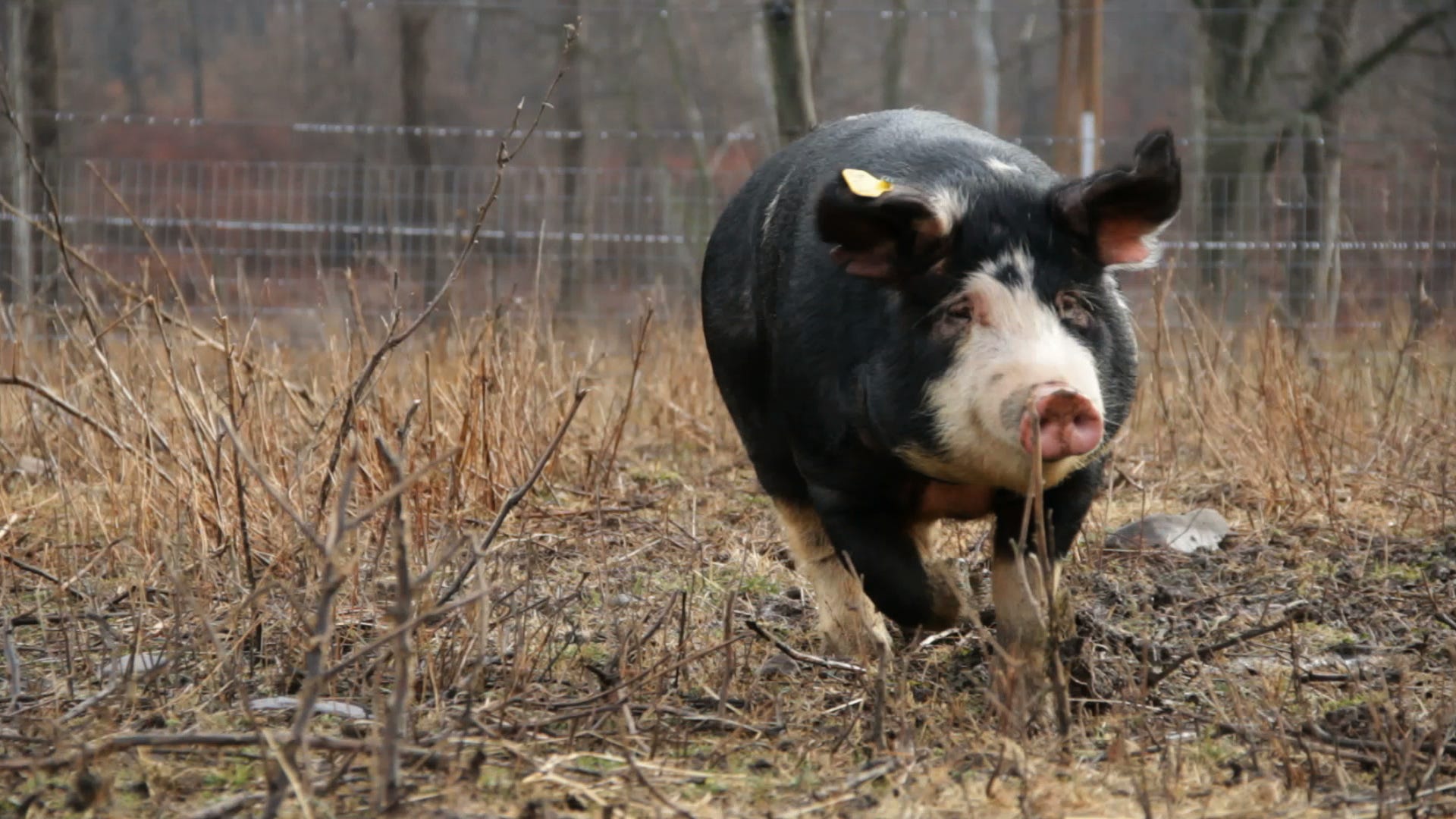
Eddie was a pig who leapt from a slaughter-bound truck onto a busy highway. He did not know what would happen next. He did not know whether he would survive the fall, the traffic, or the humans who would find him. He did not leap because survival was guaranteed. He leapt because staying meant certain death.
That leap was Shraddha.
Running a nonprofit is terrifying, so I try to strengthen my Shraddha, imperfectly, every day.
Your life is probably filled with terrifying responsibilities, too. Raising a family is terrifying. Loving deeply is terrifying. Trying to make our way through the world is terrifying.
And yet, we must go on.
We see this same faith-as-action in the life of George Müller, who ran orphan houses in nineteenth-century Bristol, England.
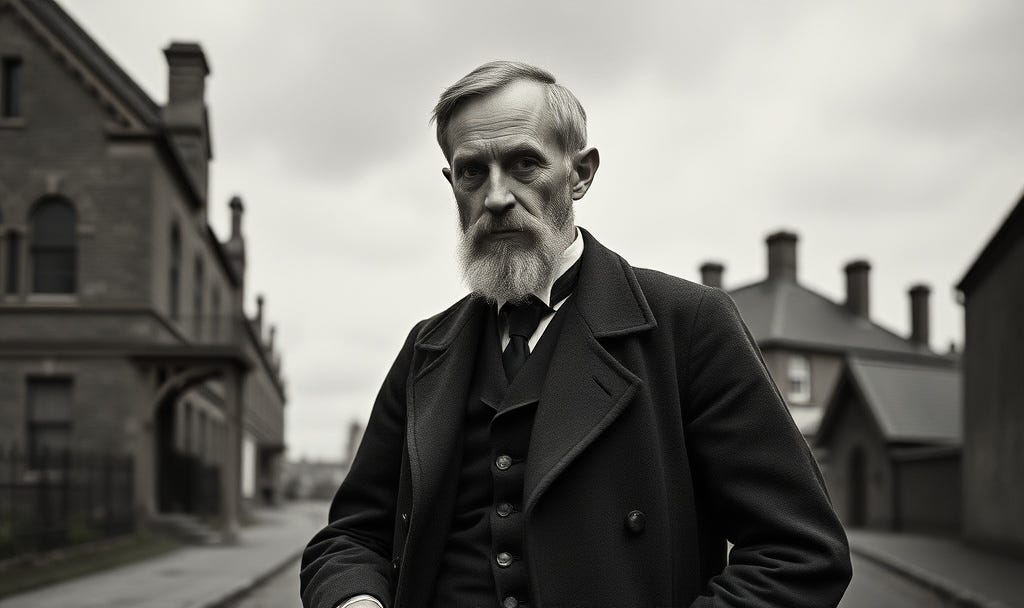
Müller made a decision early in his work that shaped everything that followed: he would never ask anyone for money, not publicly and not privately. He believed that provision, if it came, would come through prayer and practice rather than pressure.
Over his lifetime, he cared for more than ten thousand orphaned children. He kept meticulous records and did not romanticize scarcity. He documented days when there was nothing in the pantry, no money on hand, and meals approaching.
On one such morning, there was no food for breakfast. No bread. No vegetables. No money to buy any. The staff panicked. This was not abstract faith. The children were awake. Breakfast was expected.
Müller did not deny the reality of the situation. He simply refused to let fear determine the next action. He instructed the staff to set the tables as they always did. Plates were laid out. Cups were placed. Bowls sat empty.

There was still no food.
Then he told them to bring the children in and seat them. When everyone was gathered, Müller prayed. He did not ask for food. He thanked God for it.
What followed was not a single dramatic intervention but a series of ordinary human activities. A baker arrived at the door, explaining that he had been unable to sleep and felt compelled to bake bread for the orphanage, though he did not know why. Soon after, more food arrived from a local source, offered unexpectedly.
The children ate.
Müller recorded the event without flourish. He did not claim it as proof of divine favor or promise that it would happen again. He simply noted what happened when he acted as though provision was real before it was visible.
This is the pattern that repeats across traditions, species, and lives.
The leap comes before the landing.
The table is set before the food arrives. The work continues before reassurance appears.
A big, beautiful, loving life requires risk. It requires courage. And it requires Shraddha, practiced the way we strengthen any muscle: steadily, consistently, and within the limits of our current capacity.
Faith does not grow through grand gestures alone. It grows through small, repeated acts of movement in the presence of fear. It grows when we learn, again and again, that fear can be present without being in charge.
For me, strengthening the faith muscle looks like this.
It starts with continuity. I keep at least one daily rhythm that I do not abandon when fear rises. Feeding the animals. Sitting quietly. Writing a single paragraph. Prayer. Meditation. When fear tells me to stop, I let the rhythm carry me instead.
It continues with proximate action. Rather than trying to solve everything, I focus on the next necessary thing. Not the ten steps ahead. Not the perfect plan. Just the next right task that keeps life moving forward.
It requires deliberate exposure to uncertainty. I make the phone call I am afraid to make. I send the email I am tempted to delay. I ask the question whose answer I cannot control. Each time, I learn that I can survive the not-knowing.
It involves asking for help without scripting the outcome. This is one of the hardest practices. I ask, not knowing who will respond or how. I practice receiving support in the form it arrives, rather than the form I imagined.
It includes care that is not contingent on reassurance. I care for someone or something even when I am afraid I will not be able to sustain it forever. I let love be real without demanding guarantees.
And sometimes, it is as simple and as hard as setting the table. Preparing for nourishment, provision, or connection before there is evidence that it will come. Acting as though what is needed might arrive because I am willing to be ready for it.
None of these practices guarantee safety or success. That is not their purpose.
Their purpose is capacity.
Each time we do one of these things, the faith muscle strengthens. Not dramatically. Not visibly. But reliably. We become a little more able to move while afraid, to stay present while uncertain, to keep walking without proof.

Here is a tool to return to when fear is loud and reassurance is absent. I call it the Set the Table practice.
The Set the Table Practice
Step 1. Name the fear plainly. Ask: What am I afraid will happen? What do I fear losing? What feels at stake right now? Write one or two sentences. No fixing. No reframing.
Step 2. Identify what love is asking next. Ask: If love were in charge for the next ten minutes, what would it ask me to do? What is the next necessary thing, not the whole plan? Choose something small enough to do today.
Step 3. Set the table. Prepare for the good thing before it arrives. Make the call before you know the answer. Open the document before you know what you will write. Lay out what is needed for care, work, prayer, or rest. You are not pretending everything will work out. You are acting as though it might.
Step 4. Do the action while fear is still present. Do not wait for calm. Do not wait for confidence. Let fear come along for the ride, but do not let it drive.
Step 5. Record what happened. At the end of the day, write one sentence: What happened when I moved anyway? Not to prove anything. Just to build memory. Over time, this becomes evidence, not that things always work out, but that you can keep moving even when they don’t.
This is how the muscle grows. Quietly. Reliably. Through use.
Shraddha is not about knowing how things will turn out. It is about refusing to let fear interrupt what love is asking of us next.
May you trust the strength of the path you are already walking. May you remember that fear does not mean stop. May you leap when staying still would cost you your integrity, your love, or your life. And may the table you set today be met, in time, by what is needed.