
When the Bells Rang
What a week of violence in Puerto Vallarta revealed about trauma, resilience, and the healing power of community

Sighing luxuriously, I stretched out in bed, savoring the pleasant ache of muscles that had been worked well the day before. The sheets were soft against my skin, emitting a faint scent of jasmine.
Outside, Puerto Vallarta was waking slowly. Church bells began to ring somewhere in the distance, their notes drifting softly across the rooftops, while children’s voices rose and fell in bursts of laughter from the street below, and underneath it all, steady and constant, was the low roar of the ocean. I whispered gratitude for the opportunity to visit this beautiful city and spend time with my close friend who lives here.
Rolling onto my side, I pulled the covers up a little higher, enjoying the rare luxury of lingering in bed.
Normally when I am in Vallarta I wake early so I can walk the beach before the tourists come out, and those early hours are my favorite, because the sunlight slips across the water in long ribbons of gold and the birds are everywhere: pelicans gliding low over the waves before plunging suddenly into the sea, egrets stepping delicately through the shallows, magnificent frigate birds circling high above the bay like black kites suspended in the morning air.
Some of the pelicans are surprisingly social, wandering quite close and tilting their heads as though curious about the humans wandering through their morning world, and a few of them have even posed obligingly when I lift my phone to take a photograph.


But the night before I had fallen into the spell of a wonderful book and stayed up far later than I intended, turning pages long after midnight, and so that morning I allowed myself the rare luxury of sleeping in, pulling the covers around me and thinking, just a little longer.
For a moment, lying there listening to the bells, the children, and the distant ocean, the morning felt perfectly ordinary.
Then a loud boom shattered the quiet.
I lay still, listening, because in Puerto Vallarta loud noises are not unusual: a truck backfiring, construction somewhere nearby, firecrackers left over from a celebration.
But then there was another explosion.
And another.
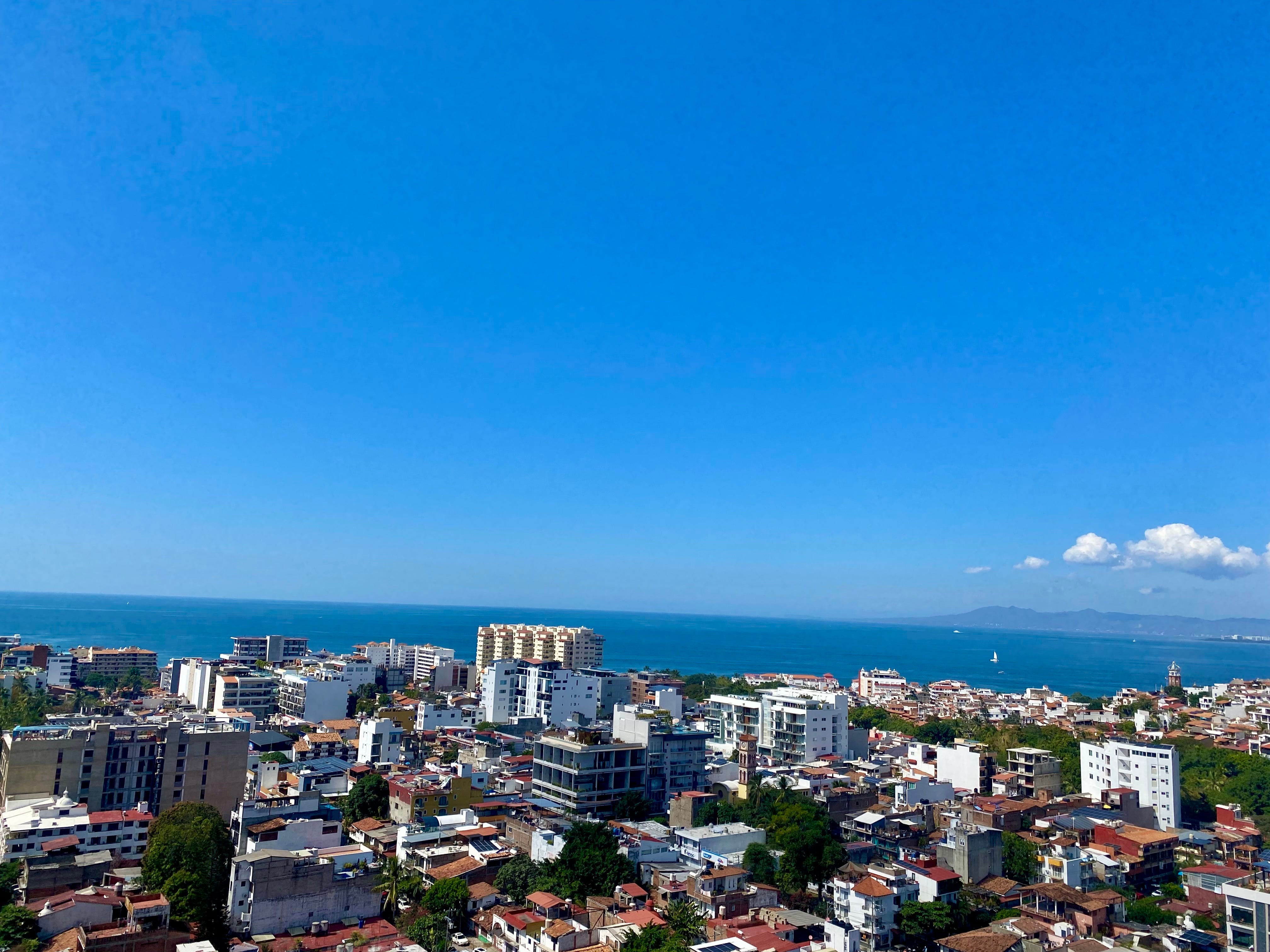
I slipped out of bed and padded across the cool tile floor toward the balcony doors, the bells still ringing somewhere in the distance, their notes drifting softly across the rooftops. For a moment I simply stood there looking out across the city toward the curve of the bay, letting the morning light settle around me the way it always does in Vallarta.
That was when I noticed the smoke.
At first my mind tried to place it somewhere ordinary—someone burning trash, a small construction fire, something routine and unremarkable—but even as I stood there watching another plume rose in the distance, darker this time, twisting slowly upward into the pale morning sky.
Then another.
And just as I began to wonder about it, a loud boom rolled across the city.
Smoke was rising now in several places, and that was when the uneasiness arrived.
I stepped back inside and closed the balcony doors, suddenly aware that my hands were shaking. Something sharp and heavy was lodged in my chest. I picked up my phone and called my friend D, who lives just a few blocks away, close enough that we can wave to one another from the rooftops of our buildings.
She answered on the first ring.
“Oh dear,” she said, and then again, more softly, “Oh dear, oh dear, oh dear.”
“What is happening?” I asked.
“I don’t know,” she said. “The cartel. I don’t know.”
We stayed on the phone together, each of us huddled inside and away from the windows while explosions continued to echo across the city. As we talked she texted a friend who lives in another part of the city, hoping someone might know what was happening. Gradually bits of information began to trickle in: buildings on fire, cars burning in the streets, something about retaliation for the arrest of cartel leaders.
“Where are you getting your information?” she asked.
“Live from the rooftop,” came the reply.
Meanwhile I texted my neighbors.
Good morning! Do you know what is happening out there?
Cartel. Stay inside.
Oh my God! Are they blowing up buildings?
Maybe and who knows. Stay inside.
Glad I didn’t go for my beach walk!
Stay in. If you need anything like food lol lmk.
Our phones kept lighting up with messages from friends checking on us, each one carrying some variation of the same message: stay inside, are you safe, don’t go out.
D’s Pilates trainer texted to make sure she was at home and staying put. Earlier that morning he had been standing in a bakery when four teenagers from his neighborhood burst through the door, their faces grave, shouting for everyone to get out immediately and run as far away as possible.
Later we heard they had been doing the same thing with the vehicles they were bombing, stopping the cars and screaming for people to run before the explosions.
They were trying not to hurt anyone.
And in the middle of all of it something else became strangely noticeable: there were no sirens, no police, no ambulances, nothing.
Some people said the cartel had blocked the highways in and out of the city with burning vehicles, which would explain why help wasn’t arriving from outside. But Vallarta itself has police stations and hospitals scattered throughout the city.
Where were the police?
Where were the ambulances?
Had they been warned not to respond?
Compounding the strange silence was the fact that I had no internet connection. Normally in a moment like that the instinct is to search for information, to pull up the news and try to understand what is unfolding. Several people I was messaging with were searching for news on their end, refreshing pages and scanning social media.
But nothing appeared.
For hours.
The explosions continued through the morning, sometimes echoing across the rooftops from somewhere far away and sometimes sounding much closer, while smoke drifted upward in several places across the city, dark columns twisting slowly into the bright sky.
And then, sometime around eleven o’clock, something unusual happened.
All across the city the church bells began to ring.
At first I heard only the bells from the church nearby, their familiar notes drifting through the air the way they had earlier that morning when the day still felt peaceful and ordinary. But within moments other bells joined them, and then more, until it seemed as though every church in Puerto Vallarta was ringing at once, the sound rolling across the city in overlapping waves, one set of bells answering another.
They rang together for several minutes.
And then they stopped.
For the first time since the explosions had begun everything was quiet, and the silence lingered perhaps twenty minutes before the explosions began again.
Around 1:30 the bombs grew much louder, no longer distant echoes rolling across the city but sharp concussions that seemed to detonate directly beneath the bones of the buildings. Each one reverberated through the structure and into my own body, the vibration traveling up through the floor and into my chest.
Somewhere nearby people screamed.
That was when I realized it had reached my neighborhood, and predictably my thoughts turned to the dogs.
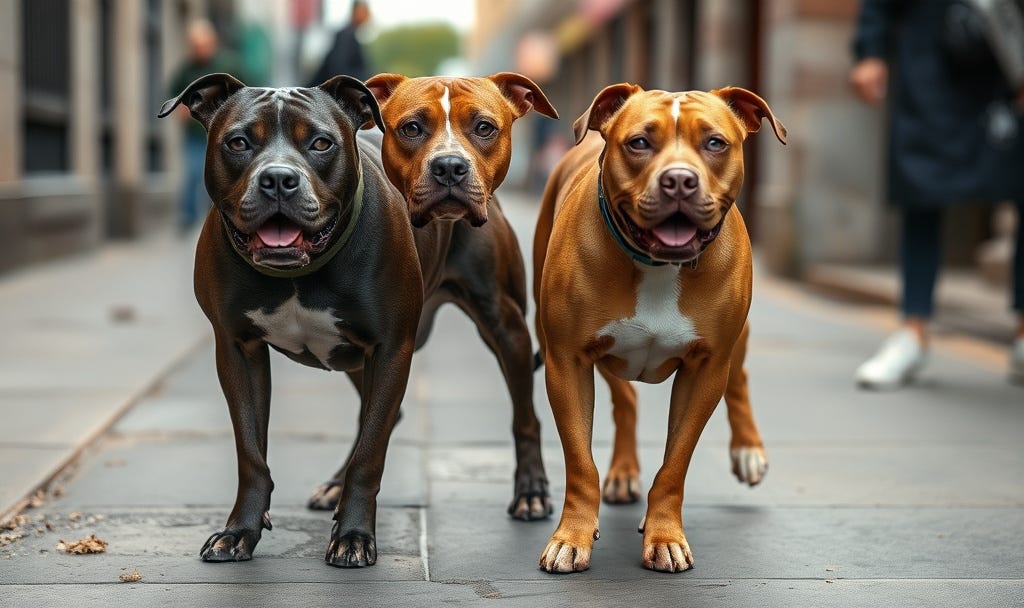
Over the past few days I had befriended several street dogs who wandered through the area, gentle creatures who had quickly decided that I was worth checking on whenever I passed by, and I thought of them out there in the chaos, confused and frightened by the explosions.
And then I thought of Pedro.
Pedro had built himself a small shelter along the stairway that climbs past my building, piecing together a place to sleep from scrap wood and tarps. He had one of those effervescent personalities that seem to brighten every space they enter, and within a day or two of my arrival we had become friendly. He spoke excellent English and greeted everyone who passed with a warm smile and a kind word.
Every few days he swept and mopped the stairway, carefully scrubbing the steps with soap and water as though the space belonged to him and he wanted it to look its best.
I wanted to go outside, to call the dogs and invite Pedro in so that at least the boy and the animals could be safe.
But I didn’t dare.
At that point we still knew very little about what was happening, and rumors were already swirling that the bombers were moving through the city. As a foreigner, the possibility of kidnapping flickered through my mind just enough to keep me inside.
Meanwhile, across town, D was watching her own street. At one point she fell suddenly silent on the phone.
“A motorcycle just pulled up,” she whispered.
In the background I could hear voices rising in alarm as her husband and neighbors called out to one another, trying to track where the rider was going.
The bombers, we had heard, were all on motorcycles.
For several long moments we held our breath.
Then the rider continued down the street and disappeared.
We both exhaled.
The city remained locked down through Sunday and all of Monday. I tend not to keep much food in my apartment when I’m in Vallarta, because most days I grab something while I’m out walking through the neighborhood and there are often leftovers waiting at home from dinner the night before.
But that night I had eaten the leftovers.
And now everything was closed.
Fortunately the neighbors I had met only a day or two earlier stepped in, and over the course of the lockdown they brought me delicious plant-based meals, making sure I had something to eat while we all waited together for the city to reopen.
